





Planning a house extension in Manchester is exciting — but before you start thinking about layouts and materials, there’s one question you need to answer first: do you actually need planning permission?
The good news is that many homeowners in Greater Manchester can extend without a full planning application. The less straightforward news is that the rules depend on your property type, where you live, and how large you want to build. This guide cuts through the confusion so you know exactly where you stand before any work begins.
What Are Permitted Development Rights?
Permitted development (PD) rights are a set of nationally granted rules that allow homeowners to carry out certain improvements — including extensions — without applying for planning permission. They are set by Parliament and apply to most houses in England, including properties across Greater Manchester.
If your extension falls within permitted development limits, you can proceed without a planning application. However, you will still need building regulations approval regardless of planning status — this is a separate process covering the structural and safety standards of the work.
It’s worth noting that PD rights apply to houses only. If you live in a flat or maisonette, any extension will require full planning permission.
Single-Storey Rear Extensions: The Rules
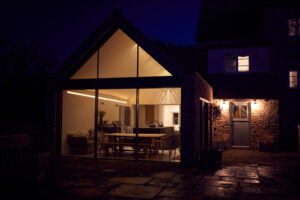
Single-storey rear extensions are by far the most common type of extension in Manchester — typically used to create open-plan kitchen-diners or additional living space.
Under standard permitted development, a single-storey rear extension can extend:
- Up to 4 metres beyond the original rear wall of a detached house
- Up to 3 metres for a semi-detached or terraced property
The extension must not exceed 4 metres in height and must use materials that match the existing exterior of the house.
The Prior Approval (Larger Home Extension) Scheme
If you want to build larger than the standard PD limits, Manchester homeowners can apply under the Prior Approval scheme — sometimes called the Larger Home Extension scheme. This allows:
- Up to 8 metres for detached houses
- Up to 6 metres for semi-detached and terraced properties
To use this route, you submit a Prior Approval application to your local council. Your neighbours are consulted and have 21 days to raise any objections. If no objections are raised, the council typically approves the extension within 42 days. If objections are received, the council will assess the impact on neighbouring properties before making a decision.
This is a useful route for homeowners who want more space without the full planning process — but it requires more lead time than straightforward permitted development.
Double Storey Extensions: What You Need to Know
Two-storey rear extensions can also fall under permitted development, but the rules are stricter:
- The extension must not extend more than 3 metres beyond the original rear wall
- It must not be within 7 metres of the rear boundary
- Upper-floor windows on a side elevation must use obscured glazing and must not be openable below 1.7 metres from the floor
- No balconies are permitted
All side extensions of more than one storey require full planning permission regardless of size.
When Will You Always Need Planning Permission?
Even if your extension seems modest, there are situations where a full planning application is always required:
You live in a designated area. Conservation areas are found throughout Greater Manchester — including parts of Altrincham, Stockport, and Salford. In these areas, permitted development rights are restricted, and extensions that would otherwise be PD may require formal permission.
Your property is listed. Listed buildings require listed building consent for any works that affect their character, in addition to any planning requirements.
An Article 4 Direction applies. Local councils can remove permitted development rights in specific streets or areas through an Article 4 Direction. This is more common in densely built urban areas. If you are unsure whether your property is affected, contact your local planning authority before starting work.
Your extension is at the front of the property or beside a road. Extensions facing the highway almost always require planning permission.
Previous extensions have used up your allowance. PD rights are calculated against the original size of the house — not the current size. If previous owners extended the property, the remaining PD allowance may be smaller than you expect.
Should You Apply for a Lawful Development Certificate?
Even if your extension falls clearly within permitted development, it’s strongly recommended to apply for a Lawful Development Certificate (LDC) from your local council. This is a formal document confirming that your works are lawful under PD rights.
An LDC is not a legal requirement — but it costs £103 in England and is worth every penny. It provides documented evidence for when you sell the property, and protects you in case planning rules change after work is completed. Solicitors and mortgage lenders routinely ask for this when a property is sold, so having it in place avoids complications further down the line.
Manchester’s Local Planning Authorities
Greater Manchester spans ten borough councils, each with its own planning department. Which authority you need to deal with depends on where in Greater Manchester your property sits:
- Manchester City Council — covering central Manchester and surrounding areas
- Trafford Council — covering Altrincham, Sale, Stretford and surrounding areas
- Stockport Council — covering Stockport, Cheadle, Hazel Grove and surrounding areas
- Bury Council — covering Bury, Radcliffe and Ramsbottom
- Salford City Council — covering Salford, Eccles and surrounding areas
Each council applies the same national PD rules but may have additional local restrictions. Always check with your specific authority before committing to a build.
How Reliable Builders Can Help
Understanding the rules is one thing — but making sure your extension is designed and built to comply with them is another. At Reliable Builders,an experienced Manchester builder can handle the full application on your behalf. We have been carrying out house extensions across Greater Manchester for years, working with homeowners in Altrincham, Bury, Stockport, Salford, Wythenshawe and beyond.
We can advise you on whether your planned extension falls within permitted development, help you understand the Prior Approval process if needed, and handle all aspects of the build once permissions are in place — from foundations to final finishes.
If you’re planning a house extension and want straightforward advice from a local, family-run builder, get in touch with us today for a free, no-obligation consultation. You can also find out more about our house extensions and new builds service.
Quick Reference: Extension Rules at a Glance
| Extension Type | Standard PD Limit | Prior Approval Limit | Always Needs Permission? |
|---|---|---|---|
| Single-storey rear (detached) | 4m | 8m | No (if within limits) |
| Single-storey rear (semi/terrace) | 3m | 6m | No (if within limits) |
| Double-storey rear | 3m | N/A | No (if within limits) |
| Side extension (single-storey) | Up to half width of house | N/A | No (if within limits) |
| Side extension (two-storey) | Not permitted | N/A | Yes |
| Front/highway-facing extension | Not permitted | N/A | Yes |
| Any extension in conservation area | Restricted | Restricted | Often yes — check first |
The information in this guide reflects current permitted development rules for houses in England as of 2026. Planning rules can change and local restrictions may apply. Always confirm requirements with your local planning authority before starting work.